Paper Outlook — 2026 年 9 月 14–20 日

· 5 min read · Paper Feed

Paper Outlook — 2026 年 9 月 14–20 日

本周速览

  • 本周单细胞与空间组学占据主导,新发布的人类肾上腺、产后小鼠心脏和发育中人类子宫图谱表明,细胞类型分辨的图谱已成为组织生物学研究的标准工具。
  • 两项跨物种比较研究(人类与小鼠肾上腺、人与犬骨肉瘤)既揭示了保守的生物学特征,也明确指出了动物模型的局限,对设计转化研究的科研人员而言是一个有益的提醒。
  • 两项聚焦突变的研究将环境因素与基因组层面的变化联系起来:热量限制可降低小鼠多种组织的 DNA 损伤累积,而单链 DNA 中的非典型紫外线损伤则解释了黑色素瘤中一些反常的驱动突变。
  • 功能基因组学正向体内推进,例证是在活体小鼠心脏中依据空间信息引导基因调控因子的敲低,以检验其在心脏成熟中的作用。
  • 贯穿各篇论文的主线是将逐细胞的数据与空间信息以及功能验证相结合,从而揭示出批量方法(bulk methods)所无法捕捉的生物学现象。

Human and mouse adrenal glands are characterized by species-specific steroidogenic states and tissue turnover.

研究人员分别构建了成年人类和小鼠肾上腺(分泌应激激素的器官)的高分辨率细胞图谱。他们发现人类存在一些独特的细胞类型,可以直接合成皮质醇,并且具备小鼠所缺乏的结构特征,例如独特的内层分区。这一发现具有重要意义,因为小鼠常被用作人类肾上腺生物学研究的替代模型,而这些差异意味着相关结论未必能直接推广到人类疾病和药物测试。
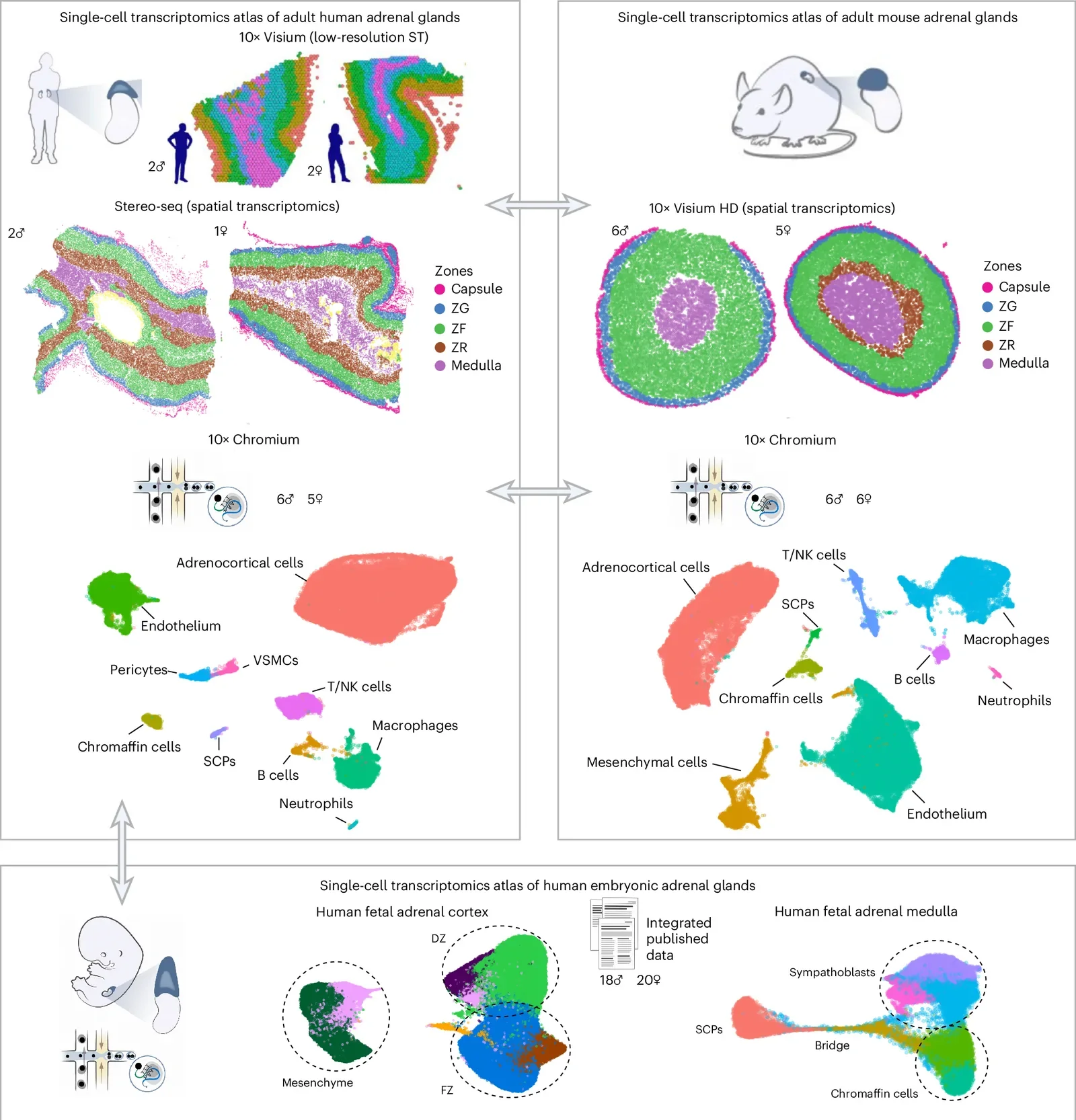
Overview of the study. Comprehensive scRNA-seq and high-resolution spatial transcriptomics atlas of adult human and mouse adrenal glands and human fetal adrenal development. NK, natural killer; ST, spatial transciptomics; VSMCs, vascular smooth muscle cells; SCPs, Schwann cell precursors; FZ, fetal zone; DZ, definitive zone.

Fig. 1,出自 Kastriti ME 等, Nature genetics (2026)。许可协议 CC BY。来源:10.1038/s41588-026-02737-1。

Nature genetics (2026) · 0 次引用

阅读原文 → https://doi.org/10.1038/s41588-026-02737-1


Integrated Transcriptomics of Human and Canine Osteosarcoma Reveals Species Stemness and Trabectedin Sensitivity.

研究人员在分子水平上比较了犬与人类的骨肉瘤,探讨在哪些情况下研究犬类肿瘤能够可靠预测人类患者的治疗反应。他们发现两者既有共同的特征,在肿瘤行为方式以及对药物 trabectedin 的反应上也存在物种特异的差异。该工作有助于研究者和临床医生判断哪些犬类癌症研究有可能转化到人类,哪些则可能产生误导。
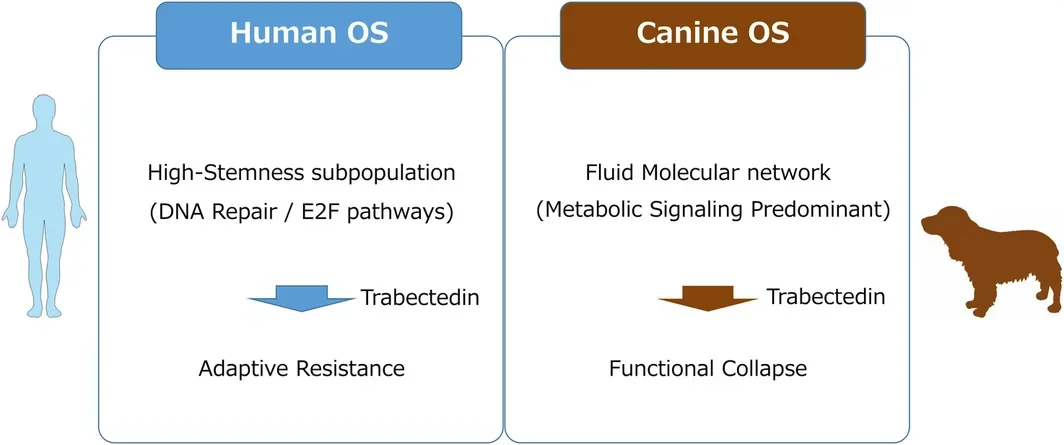
Graphical Abstract. Comprehensive comparative molecular framework for human and canine osteosarcomas. Integrated transcriptomic analyses establish a comprehensive comparative molecular framework for human and canine osteosarcomas. By defining species‐specific stemness architectures and drug response dynamics, our findings highlight the necessity of accounting for distinct cellular and immune landscapes, ultimately accelerating the precision development of next‐generation therapies across species. Parts of the Graphical Abstract were created using Servier Medical Art, licensed under a Creative Commons Attribution 4.0 International License ( https://creativecommons.org/licenses/by/4.0/ ).

FIGURE 6,出自 Kono K 等, Cancer science (2026)。许可协议 CC BY-NC-ND。来源:10.1111/cas.70524。

Cancer science (2026) · 0 次引用

阅读原文 → https://doi.org/10.1111/cas.70524


Caloric restriction modulates genome-wide somatic mutation in mice.

与正常进食的小鼠相比,采用热量限制饮食的小鼠在其肝、肾和脑细胞中累积的 DNA 突变更少,尤其是显著减少了一种常见的与衰老相关的突变模式。这项研究将热量限制已知的延寿效应,落到 DNA 损伤在基因组层面真实减少这一机制上,为「少吃可能延缓某些衰老过程」提供了新的机制层面的解释。

概念插图:Caloric restriction modulates genome-wide somatic mutation in mice.

Cell (2026) · 0 次引用

阅读原文 → https://doi.org/10.1016/j.cell.2026.08.013


Widespread atypical UV-induced mutations form in single-stranded DNA.

紫外线通常通过一些熟知的损伤方式作用于 DNA,并在皮肤癌中产生典型的 C-to-T 突变模式。本研究揭示了一条此前被低估的途径:当 DNA 在复制或修复过程中短暂处于单链状态时,会出现不同寻常的紫外线损伤,并产生在关键黑色素瘤驱动基因中可见的非典型突变。该工作拓展了人们对紫外线诱发皮肤癌机制的认识,也解释了为何部分驱动突变长期难以被理解。

概念插图:Widespread atypical UV-induced mutations form in single-stranded DNA.

Science advances (2026) · 0 次引用

阅读原文 → https://doi.org/10.1126/sciadv.aeg5184


Spatially guided in vivo single-cell functional genomics of postnatal heart.

研究人员将单细胞基因活性测量与空间位置信息相结合,构建了小鼠出生后心脏成熟过程的高分辨率分子图谱,并据此提名了若干调控心脏细胞成熟的关键基因,随后在活体小鼠中直接检验其功能。所生成的图谱将作为公共资源,服务于心脏发育、先天性心脏病以及心脏再生研究。
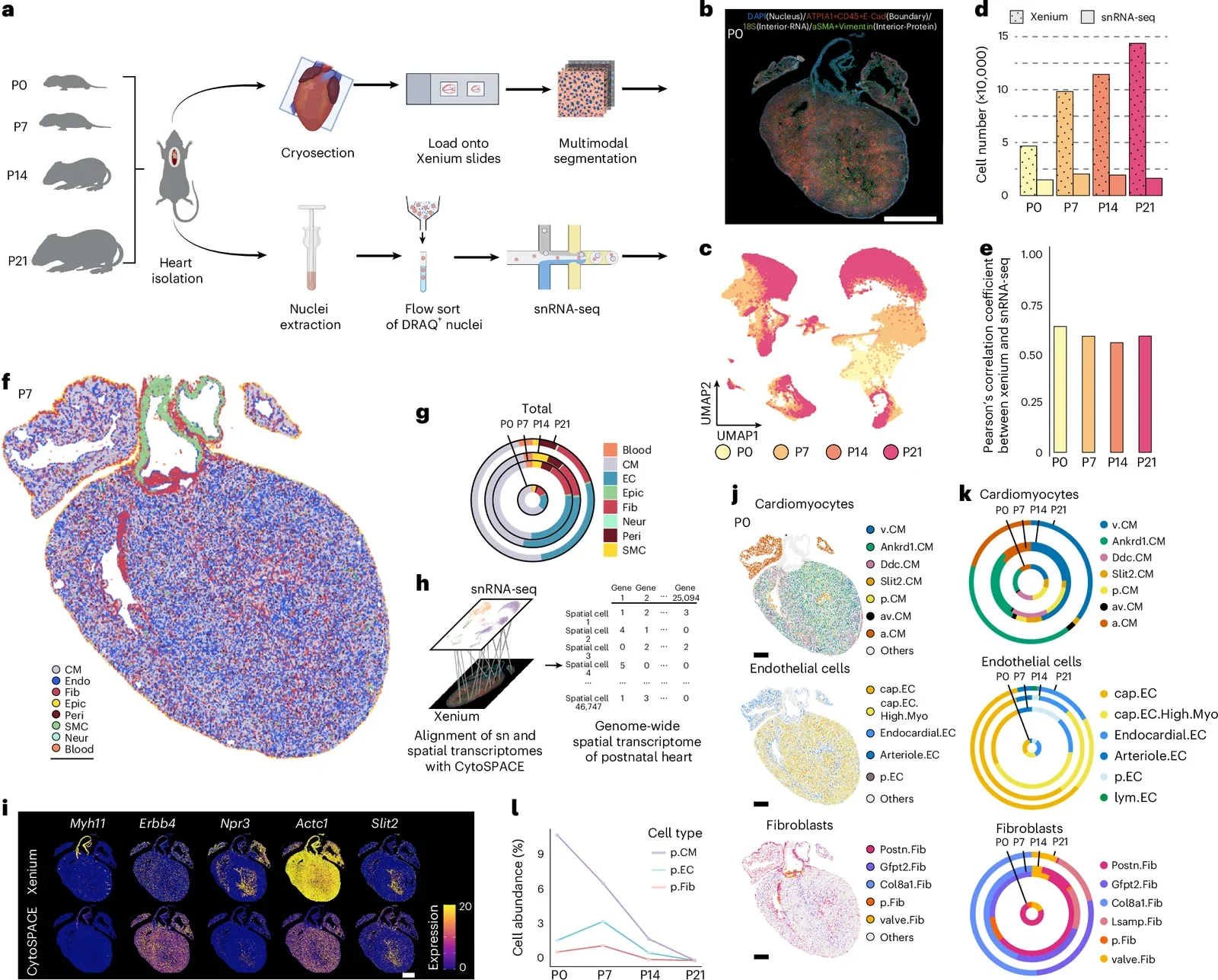
Postnatal heart atlas with spatial and temporal resolution. a , Postnatal heart atlas was composed of two sets of paired data (single-cell spatial transcriptome: Xenium; single-nucleus transcriptome: 10 × 3′ Gene Expression Library) collected at P0, P7, P14 and P21 of the postnatal development. b , Representative images showing the multimodal staining of the P0 heart. Nuclei are labeled by DAPI. Cell boundary is labeled by ATP1A1, CD45 and E-cadherin. Interior RNA is labeled with 18S rRNA. Interior protein is labeled with α-SMA and vimentin. Scale bar, 750 μm. Five represented images were randomly picked from the Xenium dataset and show similar trends. c , Approximately 67,000 cardiac cell nuclei were clustered into distinct cell populations as shown in the UMAP and across four postnatal timepoints (colored accordingly). d , The number of cells profiled for Xenium and snRNA-seq at each timepoint. e , Pearsonʼs correlation value between the snRNA-seq and Xenium for each timepoint. f , Spatial distribution of major cell types in the heart at P7. Each cell type is labeled with a different color. Scale bar, 500 μm. g , Donut plot showing the changes in cell proportion over the postnatal development. The total cell count at each timepoint is correlated with the radius of the donut. Each concentric circle, from the center outward, represents P0, P7, P14 and P21, respectively. h , High-resolution alignment of single-nucleus and spatial transcriptomes with CytoSPACE led to the genome-wide spatial transcriptome of postnatal heart development. i , Transcriptome alignment was validated by comparing the normalized expression pattern of selected markers between the original Xenium transcriptome and the CytoSPACE-imputed transcriptome. Scale bar, 500 μm. The images present the whole heart section from the Xenium dataset. j , Spatial map showing the subordinate cell states of CMs (top), ECs (mid) and fibroblasts (bottom) in the heart at P7. Scale bar, 500 μm. k , Donut plot showing the changes in the proportion of the subordinate cell states of CMs (top), ECs (mid) and fibroblasts (bottom) over the postnatal development. The total cell count at each timepoint is correlated with the radius of the donut. Each concentric circle, from the center outward, represents P0, P7, P14 and P21, respectively. l , Line plot showing the abundance of proliferative CMs, proliferative ECs and proliferative fibroblasts in the heart throughout the postnatal development. The y axis represents the percentage of each cell type in the heart; the x axis represents the timepoints in postnatal development. Panel a created in BioRender; Wang, H. https://biorender.com/b1z09cv (2026). Fib, fibroblast; Peri, pericyte; Epic, epicarial cells; SMC, smooth muscle cells; Neur, neuron; Ddc.CM, Ddc-expressing cardiomyocytes; av.CM, atrioventricular cardiomyocyte; Gfpt2.Fib, Gfpt2-expressing fibroblasts; a.CM, atrial cardiomyocyte.

Fig. 1,出自 Wang H 等, Nature cardiovascular research (2026)。许可协议 CC BY-NC-ND。来源:10.1038/s44161-026-00861-z。

Nature cardiovascular research (2026) · 0 次引用

阅读原文 → https://doi.org/10.1038/s44161-026-00861-z


HMMR<sup>+</sup> stromal cells drive human uterine development.

该研究利用单细胞基因活性测量和空间组学,追踪了出生前到青春期(从第二孕早期开始)人类子宫的形成过程,并鉴定出一群以 HMMR 基因为标记的高增殖性细胞,它们可分化为子宫内膜层和肌层。该工作为理解生殖系统疾病以及子宫疾病的发育起源奠定了基础。

概念插图:HMMR<sup>+</sup> stromal cells drive human uterine development.

Cell discovery (2026) · 0 次引用

阅读原文 → https://doi.org/10.1038/s41421-026-00921-5


快速链接

论文 期刊 / 年份 链接
Human and mouse adrenal glands are characterized by species-specific steroidogenic states and tissue turnover. Nature genetics (2026) 阅读 →
Integrated Transcriptomics of Human and Canine Osteosarcoma Reveals Species Stemness and Trabectedin Sensitivity. Cancer science (2026) 阅读 →
Caloric restriction modulates genome-wide somatic mutation in mice. Cell (2026) 阅读 →
Widespread atypical UV-induced mutations form in single-stranded DNA. Science advances (2026) 阅读 →
Spatially guided in vivo single-cell functional genomics of postnatal heart. Nature cardiovascular research (2026) 阅读 →
HMMR<sup>+</sup> stromal cells drive human uterine development. Cell discovery (2026) 阅读 →

Single-Cell Transcriptomics scRNA-seq Genomics Cancer Oncology Tumor Spatial Transcriptomics