The Mouse Brain, Mapped: A High-Resolution Atlas of 8 Million Cells
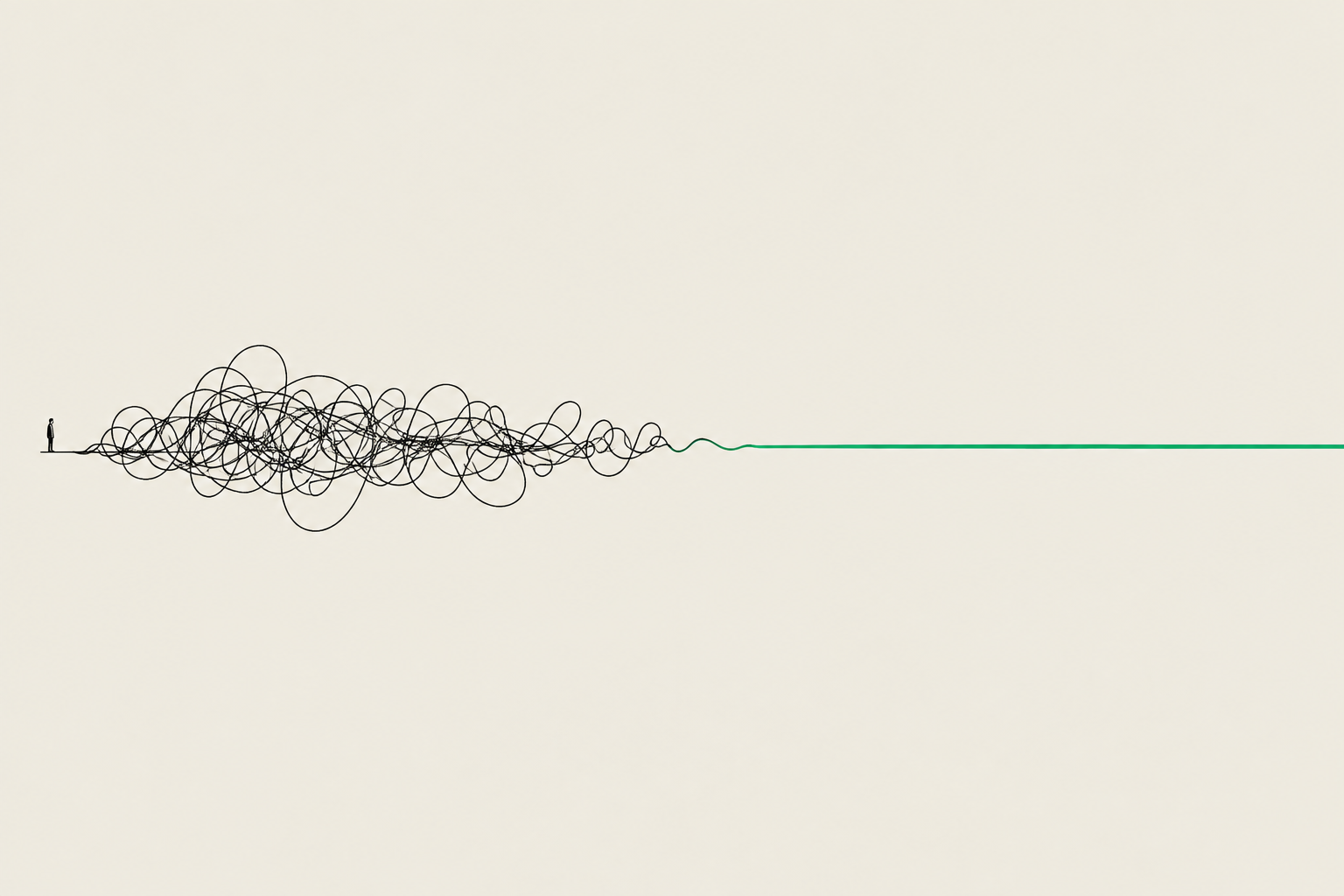
Imagine trying to understand a busy city by reading a list of its residents, with no map of where they live or work. For years, neuroscience has faced a similar problem: we could profile brain cells by their genes, but we couldn't place them precisely within the brain's 3D structure. A 2023 study by Zhang, Pan, Jung, and colleagues has now tackled this, producing a spatially resolved cell atlas of the entire mouse brain.
Key Findings
- A Census of 5,000+ Cell Clusters: The team identified over 5,000 transcriptionally distinct cell clusters, grouped into roughly 300 major cell types, across the whole brain.
- Spatial Neighborhoods and Gradients: They found distinct spatial "modules" with their own cell-type compositions, as well as gradients where gene expression shifts gradually across regions.
- Inferred Cell-Cell Interactions: The map let them predict how hundreds of specific cell types might talk to each other, including candidate ligand-receptor pairs behind those interactions.
Why It Matters
This atlas is a foundational resource. For bioinformaticians, it's a large, integrated dataset that links single-cell genomics with spatial coordinates. For biologists, it gives a systematic framework for asking how the brain's cellular organization supports its functions. And it offers a baseline for seeing how that organization goes awry in neurological and psychiatric disease.
Technical Approach
The researchers combined two techniques. First, they used MERFISH, an imaging method that maps the location of selected genes inside individual cells, across 8 million cells with a panel of over 1,100 genes. They then integrated this spatial data with larger-scale single-cell RNA-sequencing (scRNA-seq) datasets to fill in a "whole-transcriptome" profile for each mapped cell. Finally, they registered every cell to the Allen Brain Institute's Common Coordinate Framework (CCF), producing a standardized, searchable atlas.
Read More
Explore the original preprint: Zhang et al. (2023) "A molecularly defined and spatially resolved cell atlas of the whole mouse brain" on bioRxiv.