Deep Learning Decodes Biology: How Neural Networks Are Revolutionizing Genomics and Imaging
Deep Learning Decodes Biology: How Neural Networks Are Revolutionizing Genomics and Imaging

Opening Hook
We're swimming in biological data. From high-throughput sequencing to advanced microscopy, modern labs generate datasets of staggering size and complexity. The big question is no longer how to collect this data, but how to understand it. Conventional analysis methods are buckling under the strain. Enter deep learning—a branch of artificial intelligence that learns to extract meaning from the biological universe directly.
Key Findings
This 2016 review by Angermueller, Pärnamaa, Parts, and colleagues laid out the early groundwork for the field, highlighting two areas where deep learning was already making waves:
- Regulatory Genomics: Deep neural networks can predict gene regulation—like where transcription factors bind or how DNA sequences influence splicing—with high accuracy, learning the "grammar" of the genome directly from data.
- Cellular Imaging: By analyzing millions of cell images, these models can automate and speed up tasks like classifying cell types, identifying subcellular structures, and predicting protein localization, well beyond human speed or consistency.
Why It Matters
For bioinformaticians and biologists, this represents a real shift in how biological systems can be modeled. Deep learning offers a way to capture the non-linear behavior of biology without relying solely on pre-defined, hand-crafted rules. It allows us to generate testable hypotheses from raw data itself, potentially revealing patterns we wouldn't have thought to look for.
Technical Approach
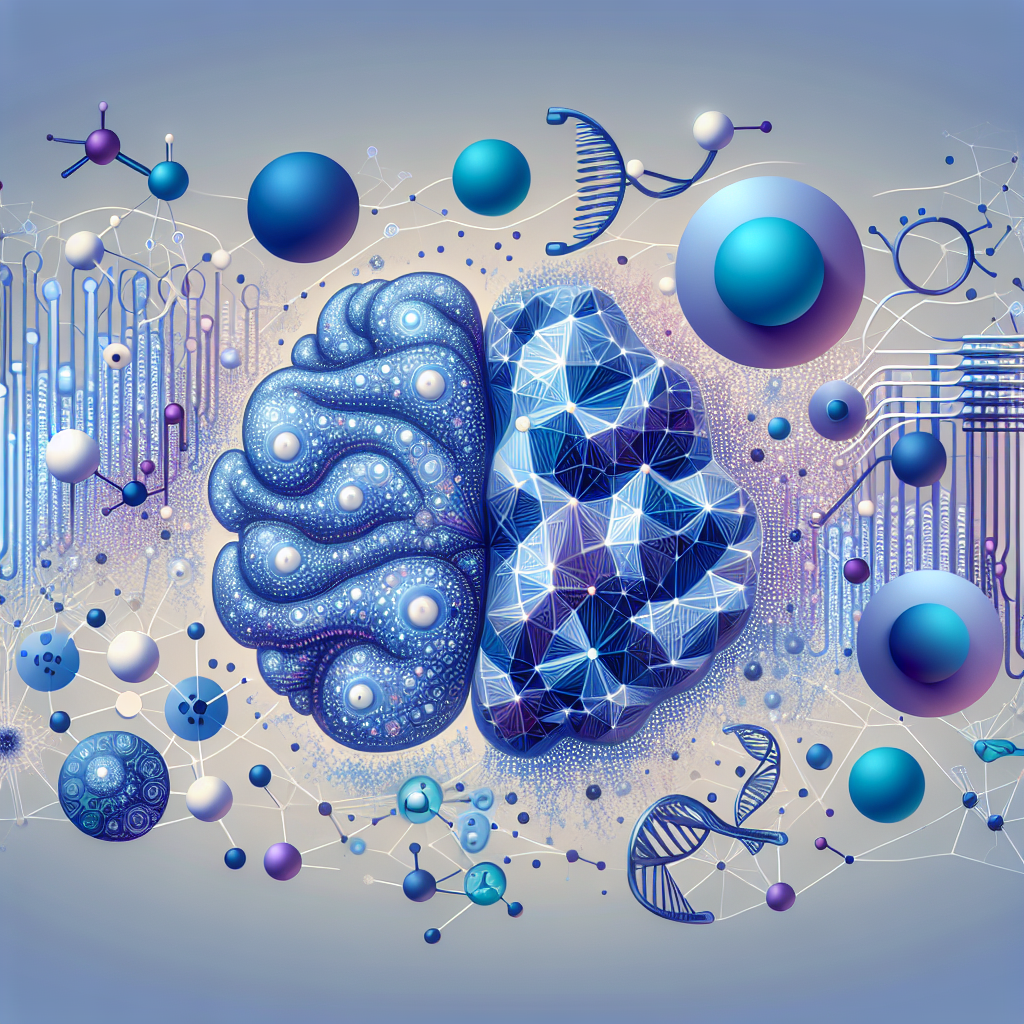
So, what is deep learning? In essence, it's a machine learning technique inspired by the brain's network of neurons. These artificial neural networks consist of multiple layers that progressively extract higher-level features from raw input data—be it a string of DNA bases or pixels from an image. By training on large labeled datasets, the network learns which features matter for making a correct prediction or classification, building its own internal representation of the underlying rules.
The authors are careful to note that these tools are powerful but not magical. Success depends on having large, high-quality datasets and careful design to avoid pitfalls like overfitting, where a model memorizes noise instead of learning generalizable patterns.
Read More
Ready to dive into the details? You can find the full review paper here: Angermueller et al., Molecular Systems Biology (2016): Deep learning for computational biology.