Connecting the Dots in Time: How TIGON Reconstructs Cellular Movies from Single-Cell Snapshots
Opening Hook
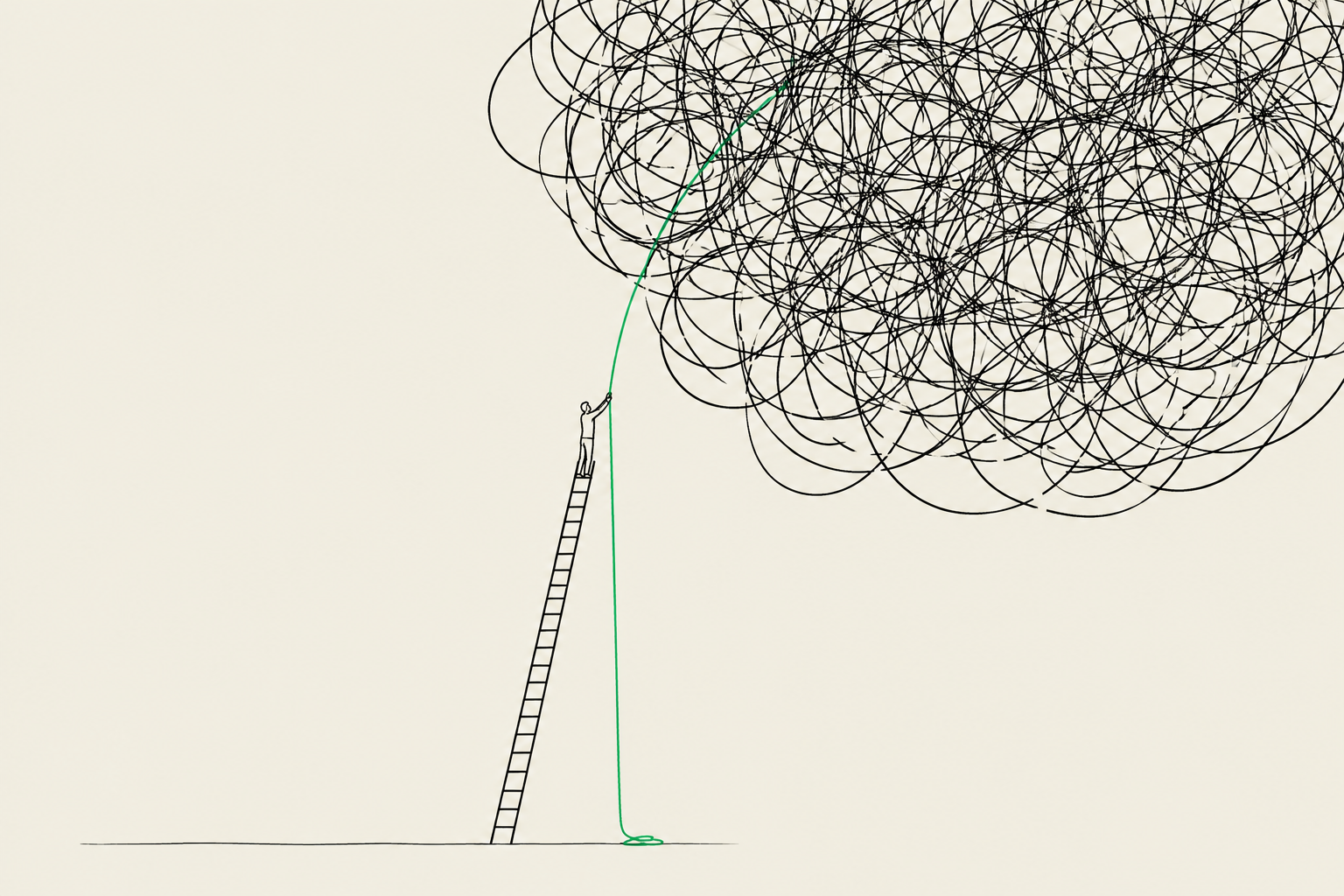
Imagine trying to understand a movie by looking at a few random, frozen frames. This is the core challenge in time-series single-cell RNA sequencing (scRNA-seq). The technology gives detailed snapshots of which genes are active in individual cells at specific moments, but the destructive nature of sequencing means we can't follow the same cell over time. A new computational tool, TIGON, stitches these isolated frames into a coherent, dynamic picture of cellular change.
Key Findings
- Dynamic Reconstruction: TIGON connects scRNA-seq snapshots from different time points to reconstruct continuous trajectories of how cells change state, predicting gene expression even at unmeasured times.
- Growth Matters: The model accounts for cell population growth and death, a factor often overlooked, and including it clearly improves the accuracy of temporal inferences.
- Beyond Trajectories: On top of tracking cells, TIGON can infer the underlying gene regulatory networks and cell-cell communication events that drive the observed dynamics.
Why It Matters
For bioinformaticians and biologists, TIGON offers a way to move from static atlases to dynamic models of biological processes. Whether the question is embryonic development, cancer progression, or cellular responses to drugs, understanding the flow of cells between states is what matters. By modeling growth and transitions together, TIGON gives a more complete view of system dynamics, which should lead to better predictions and a clearer picture of the mechanisms at work.
Technical Approach
TIGON sits on a mathematical framework called unbalanced optimal transport. In plain terms, it finds the most efficient "shipping plan" to transform one snapshot of cells (at time A) into a later snapshot (at time B), while accounting for cells that may have divided or died along the way. To handle high-dimensional gene expression data, the team used a deep learning method based on the Wasserstein-Fisher-Rao (WFR) distance, which lets the algorithm scale and manage changes in the total number of cells.
Read More
For full details, read the original paper in Nature Machine Intelligence: Reconstructing growth and dynamic trajectories from single-cell transcriptomics data.