Beyond Viral Suppression: Multi-Omics Reveals Hidden Metabolic Risk in Treated HIV
Beyond Viral Suppression: Uncovering Hidden Metabolic Risk with Multi-Omics
For people living with HIV on effective antiretroviral therapy (ART), the goal has shifted from survival to healthy aging. Even with a suppressed virus, though, many face a heightened risk of metabolic diseases. A new study shows that this risk isn't uniform, and that careful multi-omics integration can identify who is most vulnerable.

Key Findings
- Three Distinct Groups: Using network analysis, the authors identified three metabolic phenotypes among ART-treated individuals, ranging from a relatively healthy-like profile to a severe at-risk cluster (45% of participants).
- The At-Risk Profile: The severe at-risk group had higher visceral fat, BMI, and rates of metabolic syndrome, along with elevated blood triglycerides, despite having better immune (CD4+) cell counts.
- Microbiome & Lifestyle Links: The gut microbiome differed between groups, with the at-risk clusters enriched in Prevotella and strongly associated with men who have sex with men (MSM), pointing to the influence of lifestyle and sexual orientation on metabolic health.
Why It Matters
This work is a concrete example of how multi-omics integration can surface clinical insights that single-layer analysis misses. It moves past simply comparing people with HIV to healthy controls and instead reveals sub-phenotypes within the patient population. That stratification is the first step toward personalized medicine, a way to flag which individuals might benefit from targeted lifestyle or therapeutic interventions to lower metabolic risk.
Technical Approach
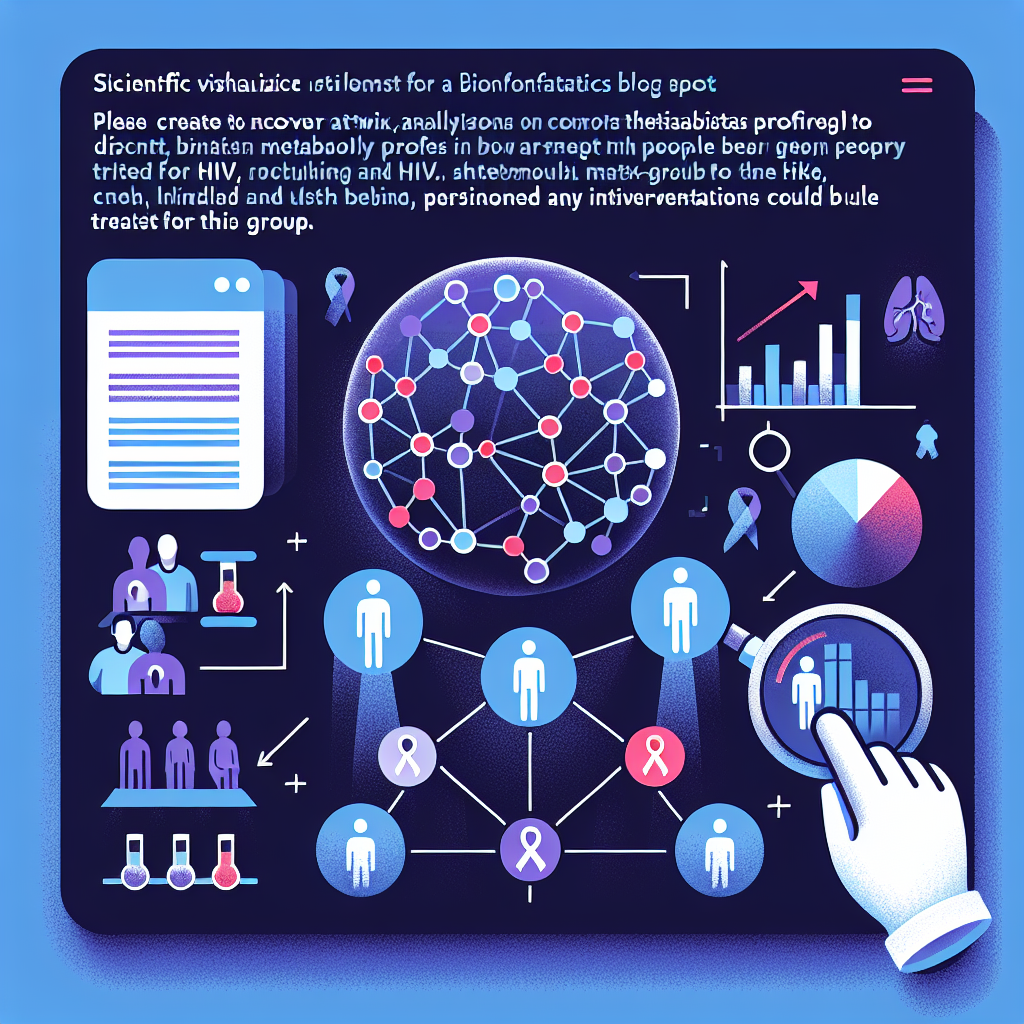
The team used a two-step bioinformatics strategy. First, they built separate molecular networks from plasma metabolomics, lipidomics, and fecal microbiome (16s) data. Then they applied Similarity Network Fusion (SNF) to merge these networks into a single map. The fusion let the data itself reveal natural patient groupings based on combined multi-omics patterns, rather than pre-defined clinical labels.
Read More
For the full details, explore the original preprint: Network-based multi-omics integration reveals metabolic at-risk profile within treated HIV-infection by Mikaeloff et al., 2022 on bioRxiv.