Beyond the Code: How BioDeepFuse Uses AI to Decode the Genome's Hidden Managers
Beyond the Code: How BioDeepFuse Uses AI to Decode the Genome's Hidden Managers
For decades, the spotlight in genomics fell on protein-coding genes. The more complicated story is in the vast stretches of the genome that produce non-coding RNAs (ncRNAs). These molecules don't make proteins, yet they regulate everything from development to disease. Sorting them into categories accurately is a hard bioinformatics problem, and a new tool called BioDeepFuse offers an AI-driven take on it.
Key Findings
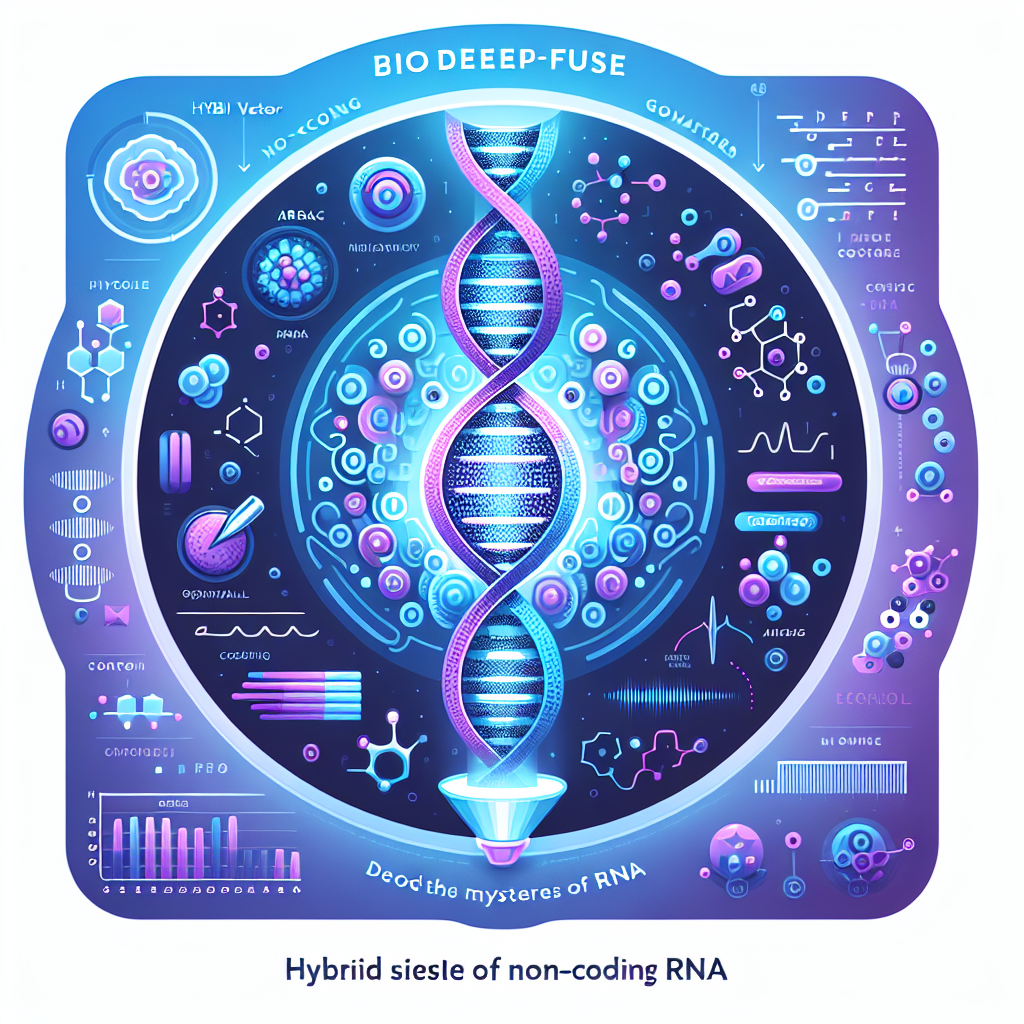
- Hybrid design: BioDeepFuse combines the pattern-finding strength of deep learning models (CNNs and BiLSTMs) with traditional, handcrafted sequence features. The mix is meant to catch both spatial patterns and sequential signals in RNA data.
- Higher accuracy on benchmarks: Tested on standard and real-world bacterial RNA datasets, the framework reported high classification accuracy and beat methods that rely on a single approach.
- Built to extend: The authors designed BioDeepFuse's methodology to be portable, hinting at future use on other organisms and disease-related RNAs.
Why It Matters
Accurate ncRNA classification is the first step toward understanding what these molecules actually do. Sharper tools mean researchers can annotate genomes more reliably, trace new regulatory circuits, and flag ncRNAs tied to diseases like cancer. BioDeepFuse nudges the field away from labor-intensive feature engineering toward something more automated.
Technical Approach
The short version: a best-of-both-worlds strategy. BioDeepFuse first turns RNA sequences into numeric inputs using several tricks, including breaking them into k-mers (short subsequences). Those inputs then feed a dual-path system — one path runs a deep learning network to pick up complex patterns automatically, while the other path slots in expert-crafted features. Fusing the two streams lets the classifier see more than either path could on its own.
Read More
For all the technical details and results, check out the original research paper in RNA Biology:
BioDeepfuse: a hybrid deep learning approach with integrated feature extraction techniques for enhanced non-coding RNA classification by A. P. Avila Santos et al. (2024).